
About
Our leadership
Senior Pastor

Reverend Jae Park is the Founding Senior Pastor of Grace Community Chapel and has been serving faithfully in the Northeast region since 1991. He is a graduate of the University of Valley Forge and received his M.Div at Westminster Theological Seminary.
Rev. Park planted Grace Community Chapel in 2005 and it has since grown to one of the largest and fastest growing Christian Reformed Churches on the East Coast. GCC operates 3 sites (EM, KM, GCC Seoul), has sent out 3 church plants: Cornerstone Church of New York, King’s Covenant Church of Bridgewater, NJ, and GCC Sydney in Australia, and missionaries around the world.
Rev. Park also served as the Director of the Student Ministry Program for JAMA and as a plenary speaker for JAMA, GLDI, KOSTA and Youth Specialities Korea. His greatest passions are discipleship, church-planting, the Yankees, and brewing coffee.
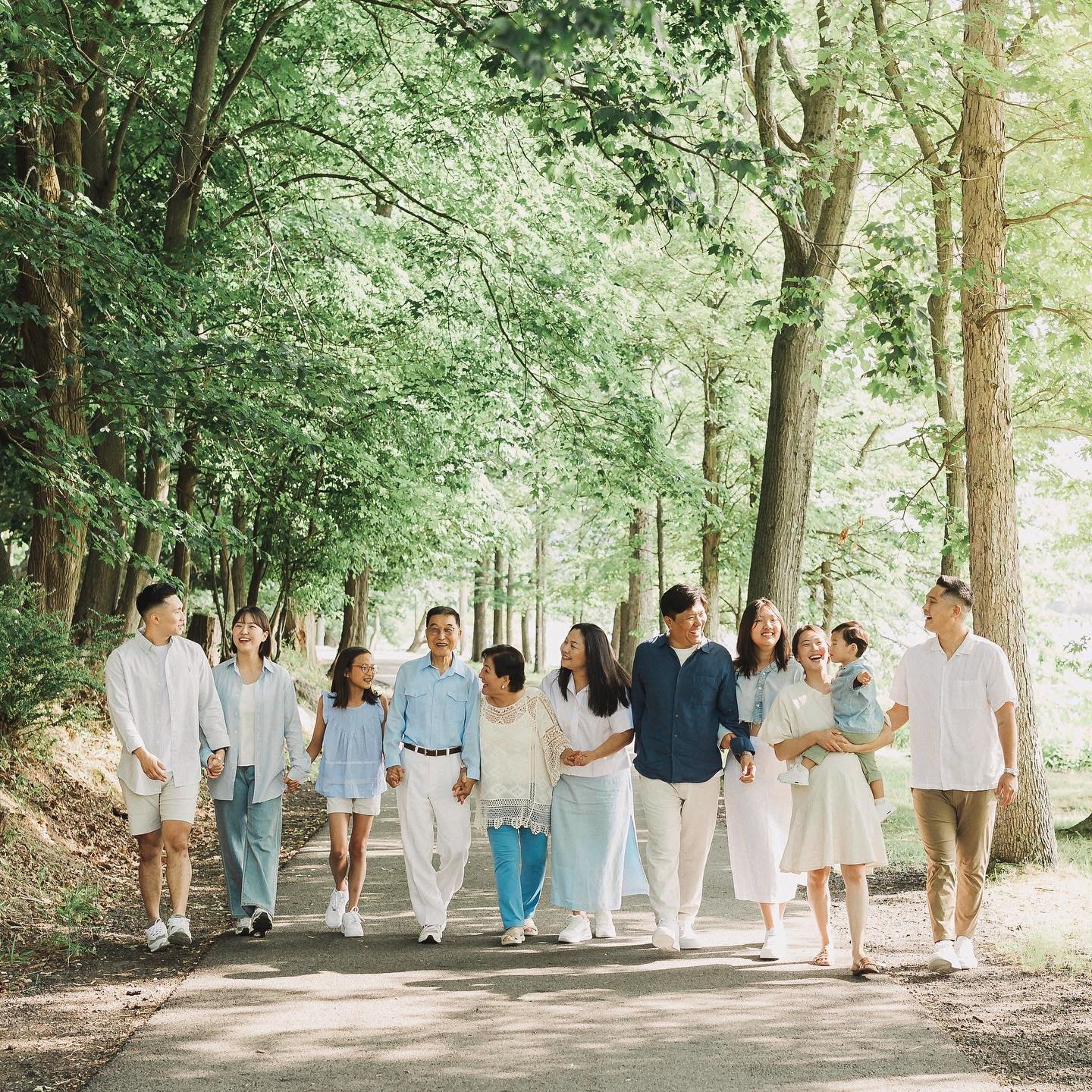
When Rev. Park isn’t preaching, he’s spending time with his lovely family.
Personal Values
Rev. Jae Park lives his life by three core values that have guided his ministry work and guarded his faith throughout the years.
Passion
Passion is a gift from God and yet also needs to be cultivated and fanned into a flame that never stops burning for Jesus.
Power
More than our human power, our lives are meant to display the power of God at work in the world and through obedience.
Purity
Purity of mind and heart leaves room for the Holy Spirit to work in us and through us. It guards us from the enemy’s foothold.
Ministry Outlook
- 01
The Need for Missions
Many of us are familiar with the missional movement—a 21st-century approach to the church popularized by leaders such as Tim Keller, Michael Frost, Ed Stetzer, Alan Hirsch, and Mike Breen. Missional living declares that the Great Commission is not a mandate reserved for a chosen few, but a calling entrusted to every believer: to proclaim the Word of God to the ends of the earth. Hallelujah!
For decades, the global effort to fulfill the Great Commission—what I call horizontal missions—has been championed primarily by the United States and South Korea. Yet the fervor of missional revival has been disproportionate. While global missions remain essential, our focus on reaching foreign lands has often left the home front neglected. The battlefield is both domestic and international.
While Christianity is exploding across Africa and Asia, it is experiencing a steady decline in the United States and a sharp fall in Europe. The typical congregation in the United States and South Korea resembles an inverted pyramid: the elderly form the broad top, while the younger generation narrows down to a fragile point. Simply put, young people are either leaving the church or not growing up in the church at all. At the current rate, virtually all churches in America could disappear within 40 years.
This is a sobering reality. In four decades, missionaries may return home only to find a nation more spiritually barren than the nations to which they were sent. What must we do? How can we win back young hearts and prepare them for a future of deep faith and joyful obedience to the Lord? These questions became the convictions that shaped my ministry.
- 02
The Silent Exodus
During this time, the Silent Exodus was already well under way. Seventy percent of second-generation Asian Americans—the children of immigrants—abandoned their faith when they left for college. It was during my service at Antioch in Philadelphia that I witnessed the Silent Exodus firsthand. Students I had discipled throughout high school quietly wandered off during their college years. In my years of ministry, I began to notice that something deeper was happening beneath the statistics. These young people were not just abandoning their faith; many of them had never possessed genuine faith to begin with.
These young people were not simply abandoning their faith—they never truly possessed it. First-generation Korean-American churches were not being missional toward their own children. Instead of understanding second-generation culture and engaging them as American youth, many churches became cultural enclaves where old-world values and honor-based spirituality were enforced without interpretation or discipleship. These children were not rejecting Christianity—they were rejecting a faith they had never been taught to understand.
Rather than hiring full-time, well-trained seminarian youth pastors who could teach sound theology in ways relevant to the next generation, many Korean churches hired only part-time staff. It was a band-aid solution masking a much deeper wound. Youth ministry became departmentalized—organized for efficiency rather than designed as a ministry serving real souls with real needs. It was treated as a separate program rather than a shared calling embraced by the whole church.
During my time as a youth pastor, I actively fought this pattern by engaging senior pastors, elders, deacons, and parents—ensuring that the entire congregation took responsibility for mentoring and serving the youth.
- 03
The Other 10/40 Window
First-generation Korean-American churches have long been champions of missions, sending countless workers to what is commonly known as the 10/40 Window – unreached regions of the world. But, I began to see another 10/40 window emerging: young people between the ages of 10 and 40 right here in our own backyard who desperately need Christ.
- 04
Vertical Missions
When I look at the cross, I am reminded of both horizontal and vertical missions. Jesus stretched His arms wide for those near and far, giving His life for all who would draw near (2 Corinthians 5:15), and He rose again so that in Him “all shall be made alive” (1 Corinthians 15:22). This is our horizontal mission—to proclaim the gospel from our Jerusalems to the ends of the earth.
At the same time, Jesus lived a deeply vertical mission—abiding daily with the Father and pouring His life intentionally into His disciples. He taught, ate with, walked with, and loved them day by day. The two greatest commandments—loving God and loving neighbor—are visibly expressed in the shape of the cross.
If we apply this missional framework faithfully, then horizontal missions sends people outward to the nations, while vertical missions calls us to nurture those entrusted to us at home. Scripture teaches that honoring God brings blessing “from generation to generation.” The command “Be fruitful and multiply” describes not only physical expansion across the earth (horizontal growth) but also spiritual multiplication within families (vertical growth). Vertical missions is not merely optional—it is essential, and I would argue, it is even the greater priority.
As Scripture says, “If someone does not know how to manage his own household, how will he care for God’s church?” Vertical integrity precedes horizontal influence.
This 10/40 window is, therefore, a call for parents, mentors, and churches to evangelize their own households. This is the heart of the Silent Exodus: how can a church send strong missionaries when it cannot even disciple its own children? Many young Asian Americans are now returning to church as adults—not because they were once Christians, but because they were never evangelized in their youth. We must not repeat this mistake. As we invest in horizontal missions abroad, we must also renew our commitment to vertical missions at home.
- 05
Conclusion
Asian Americans possess a unique calling. As a demographic, they are highly educated, resourceful, and gifted. They inherit a dual cultural identity—rooted in two of the most influential continents in modern history. They are, in many ways, natural-born missionaries, strategically placed in the most powerful nation in the world at a pivotal moment in history. Yet many do not recognize the Kingdom purpose behind their gifts.
Queen Esther once found herself in a similar position. Intelligent, prudent, beautiful, and elevated to the highest levels of power, she did not initially grasp the divine purpose behind her placement. Under Mordecai’s guidance, she gained a Kingdom perspective. As Haman plotted to destroy the Jews, Mordecai challenged her with these iconic words:
“And who knows whether you have not come to the kingdom for such a time as this?” (Esther 4:14)
Because Esther embraced her calling, an entire people were saved and God’s redemptive plan moved forward. Like Mordecai, my mission is to pastor, train, and disciple young Asian Americans so that they may devote their gifts, talents, and lives to the glory of God—for such a time as this.
- 06
And so, Seoul
written for Seoul
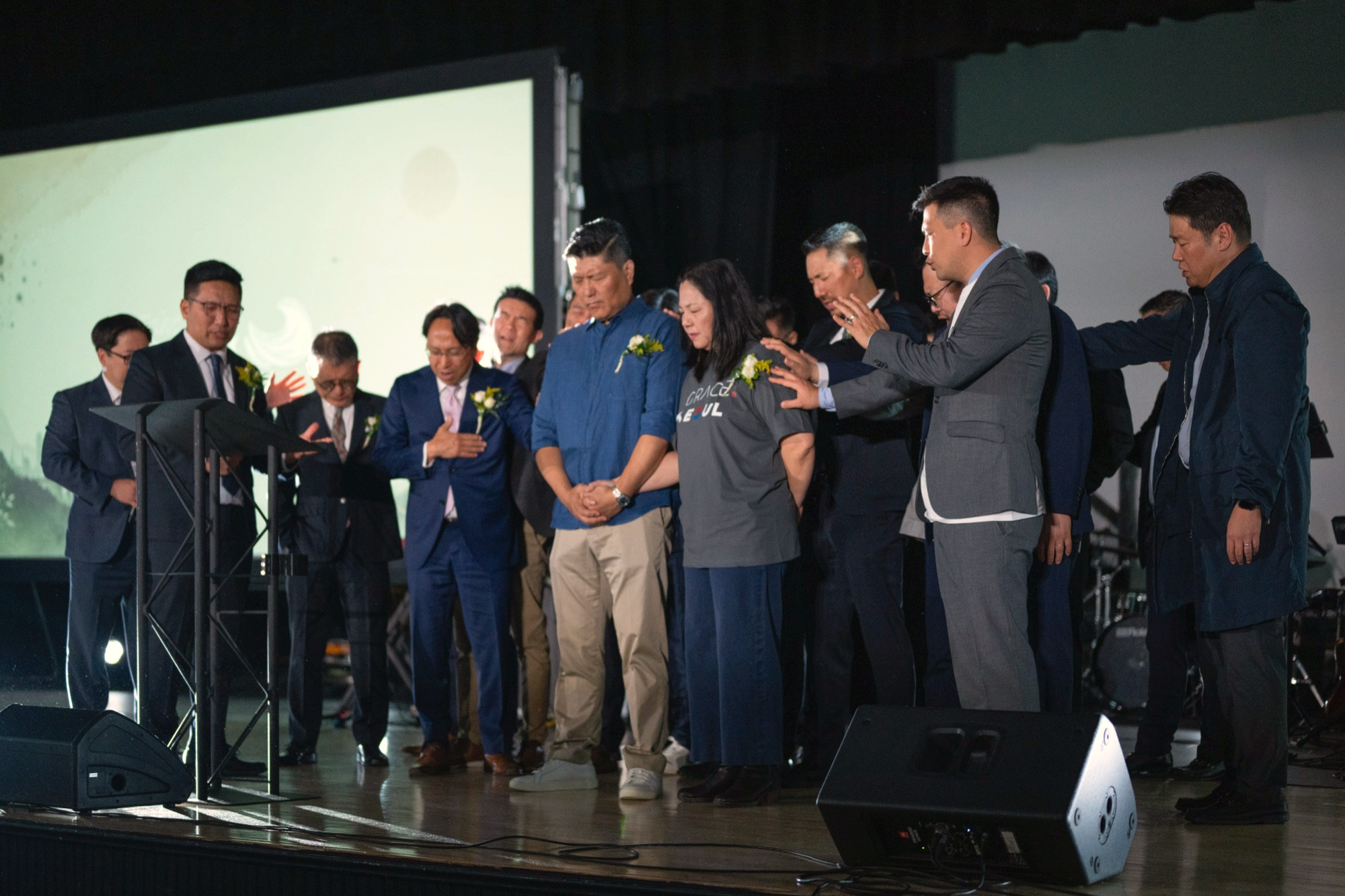
That last sentence is why this church exists. In spring 2026 the congregation at Teaneck laid hands on a team of about thirty and sent them to Seoul, and Rev. Park came with them. He preaches most Sundays at GRC Meeting Place.
GCC Seoul is not a satellite office. It is the argument above, carried to the place where the other 10/40 window is widest — a generation in Korea that has largely stopped expecting anything of the church at all. The inverted pyramid he describes in America is steeper here, and the Silent Exodus he watched in Philadelphia has a Korean counterpart that nobody has named as clearly.
So the plant is a return, not an expansion. The children of the immigrant church, sent back to the country their parents left, to do for a generation here what was not done for them.

Rev. Park’s biography and ministry outlook as published at gccnj.org, set in this site’s own typography. The final part is written for Seoul.
Want to talk to someone?
You do not need a reason and you do not need to be a member. Pastoral visits can be requested any time.